Spent the day in Taichung- I went to the English meeting, then lunch was a Greek Salad (yum yum yum), then I went book shopping.
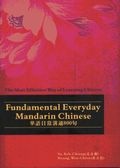 I am pretty psyched about this book. It has 800 practical Chinese phrases, with colloquial English, Pinyin, Simplified Characters, literal English translation, and Traditional characters. From "hello" to "Mr. Wang has raised some interesting points. I dont' think it would be good for a total beginner, but if you can read Pinyin and have a decent grasp of grammar it looks to be a great supplement. "
It's very cool for a couple of reasons. First is, they're all things I would like to know how to say, so my brain excitedly devours this book instead of reluctantly plodding. And...
I have almost graduated from Practical Audio Visual Chinese, Volume 1:
 This is the book I started in when I came to Taiwan, and I've just now started the final chapter (25). The best part is, apparently they've re-vamped the books so the Volume 1 I'm using is actual 2 Volumes in the ones I'd buy now. So if I continue with these books I'll skip to Volume 3 (out of 5), instead of 2A out of 3.
It's a tough book. About 30 new words per chapter (usually about 20 are new to me), and that part does include romanization. But the grammar portion of the chapter includes an often-confusing explanation in English, followed by examples and exercises that are totally in characters. And the workbook is all characters, so when I'm doing exercises it's not so much have I mastered the grammar as do I remember the characters. It's easy to spend ten minutes piecing together one sentence if I don't know a few of the characters. It's made my NTNU, one of the very top places to study Mandarin in Taiwan, and it's definitely geared to full-time students who want to read characters. Almost every university student here uses it. I haven't found a whole lot of other options.
Yes, I'd like to be able to read characters, but it's just so time-consuming to learn them. The only way is by seeing them over and over, and writing them like 50 times.
This book is also a little frustrating because I feel like I learn stupid things sometimes. I remember in my first Chinese class, a girl said her mom asked her how to say "Mom" in Chinese and she had to say "I don't know. But I can say, 'Those expensive German watches are really good-looking." Even now, I'm learning very seldom-used sentence structures- passive voice and weird ways of emphasizing stuff. One day I was having lunch with Jasmine (also my Chinese teacher now!) and some other people and Jasmine and I were trying to practice our patterns and the others were like "Why are you talking like that? That's not how to speak Chinese!" I guess some of the stuff is more literary/ poetic.
I will probably pick back up with this book after a while, but for now I think I will review some chapters I feel like I understand but don't actually use in everyday life, and study my cool new book. Also, it's so pretty, eh?


 Posts
Posts


